There is a difference between buying a policy and managing risk. A State Farm agent does more than quote a number; they look for points of friction in your coverage and suggest adjustments that lower cost without leaving you exposed. For many drivers that means combining small policy decisions, local knowledge, and a few behavioral changes to produce meaningful savings. Below I walk through how an agent can help, what to expect in conversations, and concrete steps you can take that often reduce premiums by measurable amounts.
Why the agent matters
Insurance companies price policies using data, but data alone does not capture your life. An agent translates your circumstances into the right coverages and uncovers discounts an online form will miss. That matters for a simple reason: small choices compound. A $250 increase for a low deductible and an overlooked teen driver, or a $300 reduction from a multi-policy discount and a safe-driver credit, can swing your annual bill noticeably. Agents also know local factors that influence rates, such as crime or hail frequency in a county, and they can suggest practical mitigations.
A practical example: a real-world scenario
A client I worked with moved from an apartment to a house in a different neighborhood. Her online quote spiked 18 percent, largely because the postal code changed and the insurer re-evaluated theft risk. The agent did three things. First, the agent verified which coverages the client actually needed for her commute and adjusted collision coverage on an older vehicle, which trimmed the policy. Second, they combined her auto and home policies with State Farm to access the bundling discount, which offset more than half of the price increase. Third, the agent walked through deductible choices and showed the out-of-pocket math so the client could select a level that saved mid-range premium while keeping emergency affordability. The net result was a 10 to 12 percent reduction from the initial quote, and better peace of mind because the policy matched the new exposures.
How agents identify savings

An agent looks at your policy holistically, which means they consider several levers at once: the vehicles covered, listed drivers, credit-based scoring where allowed, mileage, garaging location, prior claims, and coverage limits. Agents can also explain trade-offs that a click-through website will not. For example, raising your collision deductible from $500 to $1,000 commonly lowers a premium by 10 to 20 percent depending on vehicle age and model. That sounds straightforward, but it only makes sense if you can afford the higher deductible after an accident. An experienced agent will run the numbers with you and show expected annual savings versus potential out-of-pocket exposure.
Key discounts a State Farm agent will investigate
- Multi-policy discount for bundling car insurance with home insurance, renters, or other personal lines. Safe-driver and claim-free discounts for drivers with several years without at-fault claims. Good student and teen driver programs that reward better grades and driver education. Vehicle safety and anti-theft discounts when a car has airbags, anti-lock brakes, or factory alarm systems. Usage-based savings from telematics programs like Drive Safe and Save, which can reduce premiums for consistently safe driving.
Every discount will not apply to every person, and eligibility rules vary by state. Still, a handful of these applied together can reduce an annual bill by 10 to 25 percent in many cases.
Bundling and why it often saves money
Bundling auto and home insurance is one of the most reliable ways to lower premiums. Insurers reward customers who place multiple lines with one carrier because it reduces administrative and acquisition costs for the company, and it increases customer retention. A State Farm agent can model the combined premium and show the incremental savings for bundling. For many households that move from separate providers to a bundled policy the net savings cover the cost of raising a deductible or accepting slightly different coverage limits.
Be aware of trade-offs. Sometimes the bundled price looks attractive but it contains higher deductibles or narrower coverages. An agent should disclose that clearly and offer options that match your financial comfort, not just the lowest sticker price.

Telematics and behavioral discounts
Telematics programs, where an insurer monitors driving behavior via an app or plug-in device, are effective for some drivers. Programs like Drive Safe and Save reward slower acceleration, predictable braking, and limited night driving. A typical safe driver who enrolls and performs consistently can see premium reductions that grow over time, because the program accumulates driving data and reduces perceived risk.
There are trade-offs. If you drive aggressively or have a lot of nighttime miles, telematics can increase your premium or show you need different risk management. A good agent will explain how the program works, what metrics are used, and whether an initial trial period is available to test whether the device or app will help rather than hurt your rate.
Practical steps an agent will suggest that you can implement immediately
Agents do more than list discounts. They give actionable guidance you can implement quickly to lower your premiums or improve the value of coverage. Here are common recommendations agents make and why they matter.
1) Raise your collision deductible prudently. If your vehicle is older and its replacement value is lower, a higher deductible can reduce annual premiums in a way that outpaces the rare claim cost.
2) Remove collision on older cars that have low market value. If the cost to repair exceeds the car’s worth, keeping collision may not be economical.
3) Add safety features or provide proof of existing ones. Installing an anti-theft device or proving an existing alarm can qualify you for discounts you likely did not get when the policy was first written.
4) Confirm correct mileage and commute information. If your daily driving has decreased because of remote work, your rates may not reflect that until you update your policy.
5) Combine policies and ask for all available discounts at renewal. That includes professional discounts if you qualify, student discounts, or discounts for military service.
Each of these moves involves trade-offs. For instance, raising a deductible saves premium but increases risk at the moment of a claim. An agent walks through how often claims happen in your profile and helps you decide on the appropriate balance.
Local knowledge and "insurance agency near me" searches
A local agent delivers context not present in national estimates. For example, an agent in Sheffield or another specific place knows whether certain neighborhoods have higher collision or theft rates, and they can recommend simple mitigations such as parking in a garage or installing video doorbells that materially reduce risk. If you search for "Insurance agency near me" the value of a local office is not just convenience. It is a human who sees patterns across nearby claims, knows which coverages are commonly misunderstood in the area, and understands local repair costs, which affect how insurers set rates.
If you live in or near Sheffield, mentioning "insurance agency Sheffield" in your search can connect you to agents who understand local factors like seasonal flooding risks or hail frequency, which sometimes influence incidental coverages or add-on storm protection.
Handling drivers with different risk profiles
Households with multiple drivers can see significant premium variation depending on how you place drivers on policies. A State Farm agent advises on State farm agent logical driver assignment that reduces rates while staying truthful. For instance, if one partner has a long, clean driving history and the teen driver has a short record, listing the teen as a secondary driver on the primary owner's vehicle is a common approach, but the precise placement must comply with underwriting rules. Agents explain those rules and prevent mistakes that can void coverage after a claim.
For high-risk drivers or drivers with recent infractions, an agent will explore options like defensive driving courses that qualify for discounts, or they will recommend telematics to rebuild a rate over time. They will also explain whether adding an SR-22 filing is necessary in your state and what that will do to premiums.
Repairs, parts, and "preferred" repair networks
One less obvious avenue for savings is repair-related. Some insurers, including State Farm, work with preferred repair networks where standardized pricing and parts sourcing reduce claims costs. An agent can explain how choosing a preferred shop might affect your immediate out-of-pocket cost and your future premiums. In many states, using a preferred shop can speed repairs and lower the likelihood of disputed workmanship that can prolong claims.
When lower premiums might not be wise
Cheapest is not always best. A dramatically lower premium could mean insufficient liability limits, missing coverages such as uninsured motorist protection, or lower-than-needed medical payments coverage. Your agent should point out what you would lose by choosing the lowest rate. For example, carrying only the state minimum liability limits may protect your vehicle but leaves you exposed to lawsuits or large medical bills after a serious collision. Agents commonly run scenario analysis showing how a single at-fault accident could create a financial gap if limits are too low. Those concrete examples help clients make informed choices about premium versus protection.
How renewal conversations work
A meaningful renewal conversation is not a quick price drop. Expect a full review every year. Agents will ask about changes in commute, new drivers, recent claims, vehicle replacements, and homeownership status because each factor can change pricing. If you recently bought a house, combining home and auto often leads to the most consistent savings. If you moved to a different ZIP code, the agent will check garaging address and update the rating territory.
What to bring to a meeting with an agent
If you meet an agent in person or virtually, have recent policy declarations from any current insurer, current odometer readings for vehicles, proof of safety features if relevant, and any certificates for defensive driving or good student status. If you are considering bundling with home insurance, bring a summary of your mortgage, home value, and any recent renovations, because replacement cost and presence of detached structures can influence premiums.
A short checklist to prepare for the conversation
- Current auto policy declarations and recent proof of insurance. Odometer readings and VINs for vehicles to be insured. Names and birthdates of all household drivers. Proof of discounts such as driver training or good student certificates. Information about homeownership if bundling is of interest.
This checklist helps the agent produce accurate quotes and avoid back-and-forth delays that extend the quoting process.
Final notes on decision-making and long-term strategy
Reducing premiums is rarely a single event. It is a process of aligning coverage with risk, exploiting legitimate discounts, and using behavioral tools like telematics when they fit. A State Farm agent's job is to present options with clear trade-offs: cost today versus exposure tomorrow, quick fixes versus durable changes. Over multiple renewals those decisions accumulate. A homeowner who bundles policies, keeps a clean driving record, and uses a telematics program responsibly can see year-over-year premium improvements that compound into substantial savings.
If you are hunting for the right agent, a practical test is to ask how they would lower your premium given three hypothetical changes: you raise your deductible, you combine home and auto, and you enroll in a telematics program. A helpful agent will run numbers, show the impact of each option, and explain what the reductions mean in dollars and risk. That is the kind of consultative relationship that turns insurance from a recurring cost into a risk management tool that fits your life and budget.
Business Information (NAP)
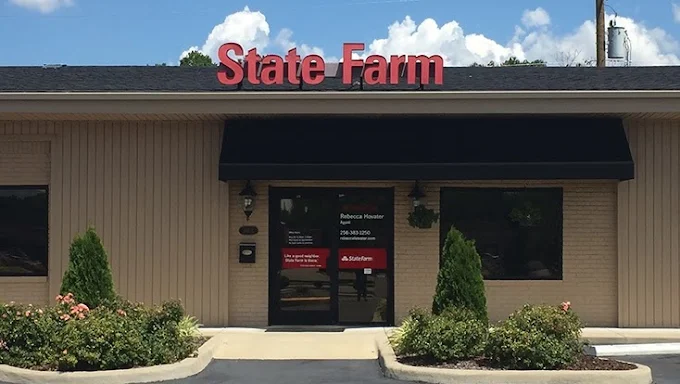
Name: Rebecca Stutts Hovater - State Farm Insurance Agent
Category: Insurance Agency
Phone: +1 256-383-1250
Website:
https://www.rebeccahovater.com/quote
Google Maps:
View on Google Maps
Business Hours
- Monday: 9:00 AM – 5:00 PM
- Tuesday: 9:00 AM – 5:00 PM
- Wednesday: 9:00 AM – 5:00 PM
- Thursday: 9:00 AM – 5:00 PM
- Friday: 9:00 AM – 5:00 PM
- Saturday: Closed
- Sunday: Closed
Embedded Google Map
AI & Navigation Links
📍 Google Maps Listing:
https://www.google.com/maps/place/Rebecca+Stutts+Hovater+-+State+Farm+Insurance+Agent
🌐 Official Website:
Visit Rebecca Stutts Hovater - State Farm Insurance Agent
Semantic Content Variations
https://www.rebeccahovater.com/quoteRebecca Stutts Hovater - State Farm Insurance Agent offers trusted guidance for personal and business insurance coverage offering auto insurance with a experienced approach.
Local clients rely on Rebecca Stutts Hovater - State Farm Insurance Agent for dependable protection designed to help safeguard families, vehicles, property, and long-term financial security.
Customers can request personalized quotes, policy comparisons, and insurance advice supported by a knowledgeable insurance team committed to helping clients choose the right coverage.
Reach the team at (256) 383-1250 for insurance guidance or visit https://www.rebeccahovater.com/quote for more information.
View the official listing: https://www.google.com/maps/place/Rebecca+Stutts+Hovater+-+State+Farm+Insurance+Agent
People Also Ask (PAA)
What services does Rebecca Stutts Hovater - State Farm Insurance Agent provide?
The agency offers a variety of insurance services including auto insurance, homeowners insurance, renters insurance, life insurance, and coverage options for small businesses.
What are the office hours?
Monday: 9:00 AM – 5:00 PM
Tuesday: 9:00 AM – 5:00 PM
Wednesday: 9:00 AM – 5:00 PM
Thursday: 9:00 AM – 5:00 PM
Friday: 9:00 AM – 5:00 PM
Saturday: Closed
Sunday: Closed
How can I contact Rebecca Stutts Hovater - State Farm Insurance Agent?
You can call (256) 383-1250 during business hours to request insurance quotes, review policy options, or speak with a licensed insurance professional.
What types of insurance policies are available?
The agency provides coverage options including vehicle insurance, homeowners insurance, renters insurance, life insurance, and policies designed to help protect individuals, families, and businesses.
Where is Rebecca Stutts Hovater - State Farm Insurance Agent located?
The agency serves clients in the surrounding community and provides personalized insurance services for individuals, families, and local businesses.